Sixth Edition · Hands-On Training
Advanced Arab
Astrophysics School
A world-class hands-on training programme in observational astronomy, data analysis, and research methodology conducted at the Kottamia Observatory.
Overview
About the School
A Premier Training Programme in Observational Astronomy
The Sixth Advanced Arab Astrophysics School (ARAS 2026) is a flagship hands-on training programme organised by the National Research Institute of Astronomy and Geophysics (NRIAG), Egypt. It will be held at Kottamia Astronomical Observatory (KAO) from October 23–29, 2026.
The school provides both theoretical and practical training in astronomical observations through the Kottamia Telescope and Meade telescopes, optical and spectral analysis, and the use of archived observation tables from international telescopes.
A central objective of the school is to train students to work as part of a research team from initial idea generation through to the final presentation of results in a research paper. Egyptian, Arab, and international professors participate, diversifying expertise and fostering future collaborative relationships.
Telescope Observations
Hands-on training with the Kottamia Telescope and Meade telescopes, including night-sky observation sessions.
Data Analysis
Optical and spectral data analysis using state-of-the-art computer laboratory facilities and archived international telescope data.
Research Collaboration
Students develop research project plans and work in teams, guided by international research advisors.
International Faculty
Lecturers from Harvard, Paris Observatory, Konkoly Observatory, Czech Academy of Sciences, and beyond.
40–50
Participants
6th
Edition
7
Days of Training
11+
Expert Lecturers
Scientific Programme
Topics & Lectures
This year's programme spans six major areas of modern astrophysics, delivered through theoretical lectures and hands-on workshops.
General Cosmology
Foundations of modern cosmology: the expanding universe, dark matter, dark energy, and the large-scale structure of the cosmos.
The Realm of Galaxies
Galaxy formation, morphology, classification, active galactic nuclei, and multi-wavelength observations of extragalactic systems.
Compact Stars
White dwarfs, neutron stars, and black holes — their formation, structure, observational signatures, and role in binary systems.
Photometric Analysis
Techniques in optical photometry: light curves, period analysis, and photometric studies of variable stars and stellar clusters.
Spectroscopic Analysis
Spectral classification, X-ray binaries, stellar evolution, composition, and advanced spectral reduction pipelines.
Astronomical Instrumentation
How electrical engineers design and power astronomical instruments — detectors, control systems, and telescope electronics.
Practical Workshops
Each theoretical topic is complemented by hands-on computer laboratory sessions where students analyse real observational and archived data, developing the research skills necessary to participate actively in international astrophysics projects.
Faculty
Invited Lecturers
An international faculty of astronomers and astrophysicists from leading institutions across Egypt, Europe, and North America.
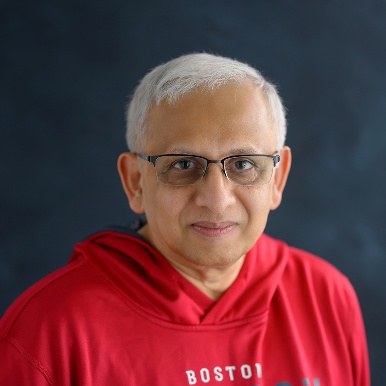
Prof. Vinay L. Kashyap
Harvard-Smithsonian Center for Astrophysics
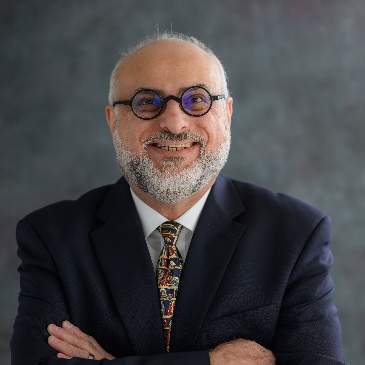
Prof. Raid Suleiman
Harvard-Smithsonian Center for Astrophysics

Prof. Antonella Fruscione
Chandra X-ray Center | Center for Astrophysics | Harvard & Smithsonian , USA
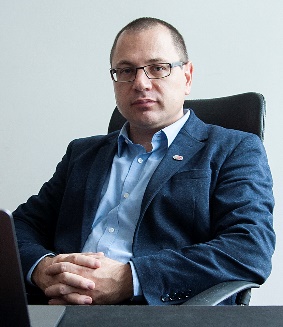
Prof. Robert Szabó
Konkoly Observatory — HUN-REN CSFK, Director

Prof. Brankica Kubátová
Head of Stellar Physics — Astronomical Institute AS CR, Ondřejov

Dr Shilpa Sarkar
Astronomical Institute of the Czech Academy of Sciences| Stellar Physics Department
Prof. David Valls-Gabaud
Observatoire de Paris
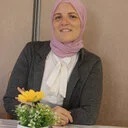
Dr. Doaa M. El Sayed
NRIAG — Department of Astronomy
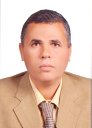
Prof. Ashraf Ahmed Shaker
NRIAG — Department of Astronomy
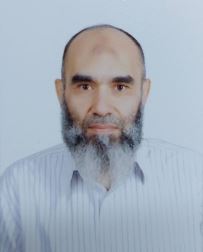
Prof. Mohamed Ibrahim Nouh
NRIAG — Department of Astronomy
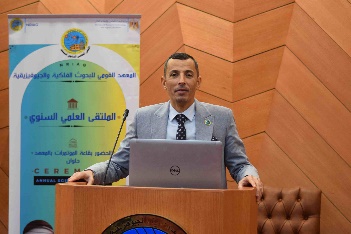
Prof. Yasser Hassan Hendy
NRIAG — Department of Astronomy
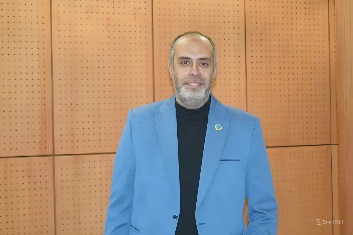
Prof. Ahmed Shokry Elshaer
NRIAG — Department of Astronomy
Prof. Gamal Eldin Hamed
NRIAG — Department of Astronomy
Eligibility & Selection
Who Should Apply
The school is targeted at physics and astronomy students and professionals from Egypt, the Arab world, and beyond.
Eligible Participants
Recent Graduates
BSc/BA holders in Physics or Astronomy
Master's Students
Currently enrolled MSc candidates
Doctoral Students
PhD candidates in Astronomy or related fields
Recent PhD Graduates
Postdoctoral researchers in early career stage
Young Staff Members
Junior academic/research staff
Participant Composition
Capacity
40–50
Total participants (limited by guest house capacity at Kottamia Observatory)
Target 50% of all participants
Arab world & global applicants
Gender parity goal
Gender parity goal
Participants
Egypt
Nour Hefnawy
Nihal Sabri
Youssef Mohamed Abd El-Maboud
Diaa Eldin Malek Sultan
Baraa Hany Abdelhamid Mohamed
Hussien Ahmed Hussien Taha
Salma Waheed Mahmoud Ibrahim Mansour
Hassnaa hassan ibrahim elsayed mohamed kassem
Mennatallah Ashraf Mohamed Ghonem Alsebai
Ahmed Aly Saber Aly Omar
Rania Medkour abdelmajeed Abdallah
Ahmed Madany
Ziad Azab
Gehad Mostafa Hasan Eldibany
Mayada Khairy
Hossam Eldin Rashad Ramadan Abdelsalam
Diaa-eldin Fouda
Egypt
Youssef Mohamed Abd El-Maboud
Samah Hossny Mohammed Abdelullah El-Essawy
Basmala Sallam
Zainab Mohsen Mohamed Mahmood
Eslam Elhosseiny
Kerolos Remon Mobarak
Iraq
Mohammed Ahmed Mahmood
Muntadher Mohammed Hamad
Palestine
Areej Tahhan Halabi
MoheyAldeen Shami
Mauritania
Ely cheikh Ould Mohamed Navee Eleyatt
Infrastructure
Data & Software
Students will receive hands-on training with professional-grade astronomical software and real observational datasets from both the Kottamia telescope and international archives.
Kottamia Telescope
The primary 1.88m reflector telescope at Kottamia Observatory. Students will participate in real observing runs.
Meade Telescopes
Portable optical telescopes for supplementary observation training and multi-telescope exercises.
International Archive Databases
Access to archived observation tables from major international observatories and space missions. Data downloaded via internet and provided on flash drives.
IRAF / PyRAF
Standard image reduction and analysis framework for optical and spectroscopic data processing.
SAOImage DS9
Astronomical imaging and data visualisation application used for FITS file inspection and analysis.
Python Astropy Stack
Python-based astronomy libraries including Astropy, NumPy, Matplotlib and SciPy for data analysis and visualisation.
Period Analysis Tools
Specialised tools for period finding and light curve analysis of variable stars and photometric data.
Computer Laboratory
Fully equipped computational lab at the Centre of Excellence, Kottamia Observatory, available throughout the school.
Archival Data Access
Participants will learn to download and handle archival observation data from international telescope databases via internet, and will be provided with curated datasets saved on flash drives for offline laboratory work.
No Prior Software Experience Required
All workshops are structured to guide participants from first principles. Introductory sessions on each software tool will be provided before hands-on data analysis exercises begin.
Applications
Registration
Applications are open globally. The school accommodates 40–50 participants with gender and nationality diversity targets in mind.
Check Eligibility
Ensure you are a physics or astronomy student/graduate. Other disciplines will not be considered.
Prepare Documents
CV, transcripts, brief statement of purpose, and a reference letter from your supervisor.
Submit Application
Complete the online registration form via the link below. Applications are reviewed on a rolling basis.
Await Decision
Shortlisted candidates will be notified by email with details on accommodation and logistics.
Fees
The registration fees are 1000 EgP.(for Egyptian) , 200 € (for Non-Egyptian). Accommodation, meals, and all school materials are provided. Selected participants should confirm attendance upon notification.
Travel
Participants are responsible for their own travel arrangements to the Kottamia Observatory site in Egypt.
Certificate
Participants who complete the programme will receive an official certificate from NRIAG.
Ready to Apply?
Registration is now open. Limited places available , early submission is encouraged.
Open Registration FormSupport
Contact & FAQ
Frequently Asked Questions
Get in Touch
Organising Institution
National Research Institute of Astronomy and Geophysics
NRIAG , Department of Astronomy, Egypt
Location
Kottamia Astronomical Observatory, Egypt
Dates
October 23 : 29, 2026
Website
www.nriag.sci.eg
Have a Question?
For enquiries about the school, please reach out to the organising committee at NRIAG.
Contact Organising Committee(+2) 01013904079